
TDTU Leads Vietnam in THE Interdisciplinary Science Rankings 2027


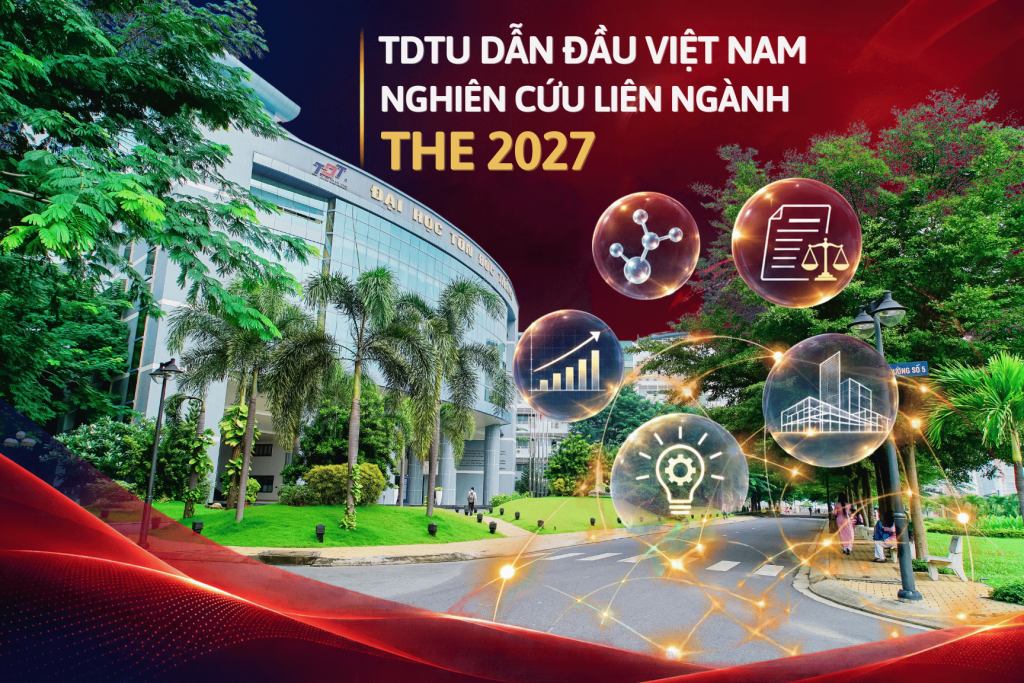
On 18 November 2026, Times Higher Education, in collaboration with Schmidt Science Fellows, released the Interdisciplinary Science Rankings 2027. Ton Duc Thang University (TDTU) was ranked joint 159th globally, with an overall score of 54.2, making it the highest-ranked Vietnamese institution in this year’s list.
The 2027 ranking includes 1,058 universities from 102 countries and territories. It evaluates institutional performance in interdisciplinary research through three pillars: inputs, process, and outputs. The outputs pillar accounts for 65 per cent of the overall score, reflecting the quality, reach, and influence of interdisciplinary research outcomes.
TDTU’s position as Vietnam’s leading institution in the ranking reflects its continuing efforts to build an open research environment, strengthen research support mechanisms, and encourage collaboration across disciplinary boundaries. The result also provides an important foundation for further investment in research groups, international cooperation, research infrastructure, and projects addressing practical development challenges.
For the Faculty of Law, this achievement creates favourable conditions for advancing interdisciplinary legal scholarship. Contemporary legal issues increasingly require dialogue between law and other fields. Property law and secured transactions are closely connected with finance, banking, real estate, and digital technology. Contract law engages with economics, management, data, and behavioural studies. Labour law is being reshaped by digital transformation, artificial intelligence, platform work, and sustainability requirements.
This institutional research environment supports the Faculty of Law in developing interdisciplinary research on digital assets, secured transactions in banking, platform contracts, civil liability in technology-driven settings, personal data protection, carbon-market regulation, labour in the digital economy, and university governance. In this context, legal scholarship can contribute not only to the interpretation of legal rules, but also to the design of practical and evidence-based solutions for economic, technological, and social development.
The ranking is an institutional-level recognition rather than an assessment of any individual faculty or discipline. Nevertheless, it provides a valuable platform for the Faculty of Law to deepen cooperation with other academic fields, enhance the quality of international publications, and contribute more substantially to the development of Ho Chi Minh City and Viet Nam.
References: Times Higher Education; Schmidt Science Fellows; Tuổi Trẻ.
- Log in to post comments